
An official/source reference is linked below. Programme rules and registration windows can change.
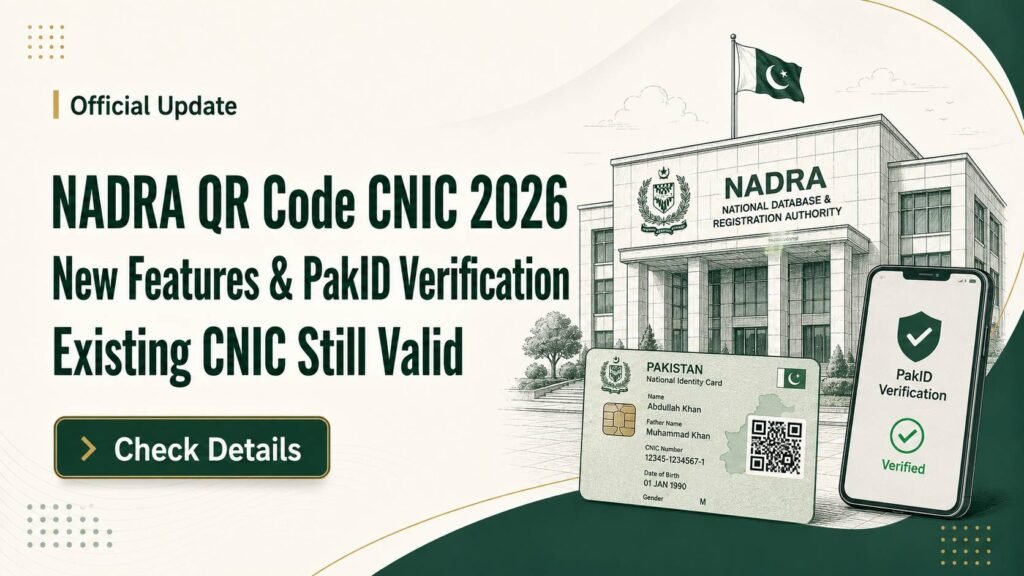
NADRA has introduced a new chipless QR code-based National Identity Card as part of Pakistan’s updated identity-document system. The first phase started on 14 August 2026 and replaces the microchip on the standard National Identity Card with a secure QR code that can be verified through NADRA’s Pak Identity mobile application.
The change does not cancel existing CNICs or Smart CNICs. NADRA states that identity cards already issued will remain valid until their respective expiry dates.
What changed in the new CNIC?

Hi there 👋
Want Latest Government Jobs in Pakistan? Connect on Whatsapp
Just click on Start Chat button below
The new card removes dependence on an imported electronic microchip and uses a secure QR code instead. NADRA says the card is manufactured in Pakistan by the Pakistan Security Printing Corporation in accordance with NADRA’s technical and security requirements.
The QR code contains relevant cardholder information and the cardholder’s photograph for secure digital verification.
When did issuance start?
The first phase started on 14 August 2026. In this phase, the QR-based card replaces the standard National Identity Card.
Do existing CNIC holders need to replace their card immediately?
No. NADRA explicitly states that all identity cards already issued remain valid until their expiry dates.
A citizen with a valid existing card therefore does not need to replace it only because the new QR design has been launched. Renewal or replacement should follow the normal NADRA rules applicable to the cardholder’s situation.
How does QR verification work?
The new card’s QR code is designed to be read and verified through NADRA’s PakID mobile application. This allows digital verification of the cardholder information embedded or linked through the secure QR framework.
The purpose is to provide secure, smartphone-based verification without relying on the imported chip used in the previous smart-card design.
What information is in the QR code?
NADRA says the QR code contains relevant cardholder information and the cardholder’s photograph. The verification process is tied to NADRA’s secure digital identity infrastructure rather than being a simple public text QR code.
What happens to Smart CNIC?
The new system is being introduced in phases. Existing Smart CNICs remain valid until expiry. Citizens should not assume a valid smart card has become invalid because a chipless design has been introduced.
NICOP rollout from January 2027
NADRA’s rollout schedule states that from January 2027 the QR code-based format will also be issued for other national identity-card categories, including:
- National Identity Card for Overseas Pakistanis (NICOP).
- Juvenile Cards.
The first phase in August 2026 is therefore not the final rollout for every identity-document category.
Pakistan Origin Card rollout
NADRA says the Pakistan Origin Card will transition to the chipless QR-based format in the final phase. The 14 August announcement does not state that all POC holders must immediately replace their current valid cards.
Why did NADRA remove the imported microchip?
The stated objective is greater self-reliance and easier digital verification. The new card is manufactured domestically and does not depend on a foreign-sourced microchip.
The QR model also supports verification through smartphones and fits NADRA’s wider digital identity and verifiable-credential direction.
Is the QR card legally approved?
Yes. NADRA states that the Federal Government approved issuance of the new card on 23 February 2026. Earlier amendments to the National Identity Card Rules and Pakistan Origin Card Rules formally introduced QR-based verification and related identity-security updates.
Where can citizens apply?
CNIC applications, renewals, modifications and replacements continue through NADRA’s authorised channels. Depending on the service, citizens can use:
- NADRA Registration Centres.
- Pak Identity / PakID digital services where the requested service is available.
- Other NADRA service channels officially listed for the relevant identity-document transaction.
The introduction of the QR card does not create a separate unofficial registration website.
When should a citizen renew or replace the card?
Use the normal NADRA process when:
- The existing card expires.
- The card is lost or damaged.
- A permitted personal detail needs modification.
- NADRA requires reissuance under the applicable identity rules.
A valid card does not need early replacement only to obtain the QR design.
How to avoid fake QR CNIC messages
- Do not pay an agent claiming every old CNIC became invalid on 14 August.
- Do not scan unknown QR links sent through WhatsApp that claim to “upgrade CNIC”.
- Use NADRA’s official website, PakID and Registration Centres.
- Do not share PakID passwords, OTPs or biometric information with an unauthorised person.
NADRA contact
NADRA publishes a 24/7 helpline including 1777 for mobile users and +92 51 111 786 100.
What the August rollout does not change
The launch does not create a new citizenship category, change a citizen’s CNIC number or invalidate cards already in circulation. It changes the physical/verification design used for newly issued cards in the applicable phase.
Citizens should continue to use the card they already hold until it expires or until a normal NADRA transaction requires reissuance.
Standard CNIC first, other cards later
NADRA’s phased plan matters for overseas Pakistanis and parents of minors. The August 2026 phase applies to the standard National Identity Card. From January 2027, NADRA plans to extend the QR format to NICOP and Juvenile Cards. POC transition comes in the final phase.
This means an overseas Pakistani should not assume that every NICOP issued immediately after 14 August 2026 must already use the new QR format.
Verification through PakID
The QR design is intended for secure verification through the Pak Identity ecosystem. A verifier should use the authorised NADRA process rather than a random QR-reader application that merely displays unverified text.
NADRA’s wider digital-identity framework also supports digitally signed, verifiable credentials and QR-based validation, which is consistent with the new physical-card direction.
When a replacement may still be needed
A citizen may still need a replacement or reprint where a card is lost, damaged or otherwise requires reissuance. Modification is a separate transaction where personal information changes under NADRA rules. These normal service reasons are different from replacing a valid card only to obtain the new design.
First-time CNIC applicants
First-time applicants should follow NADRA’s normal identity-establishment and biometric-verification requirements. The QR card changes the issued credential format; it does not remove the need to prove identity and eligibility under NADRA rules.
Official verification matters
Because the new card is a security document, citizens should rely on NADRA’s own website, PakID application and registration centres for fees, processing categories and required documents. Social-media graphics showing an unofficial “QR upgrade fee” or mandatory immediate replacement should not be treated as NADRA instructions.
Key points
- QR-based CNIC issuance began 14 August 2026.
- The new standard card is chipless.
- QR verification works through PakID.
- Existing issued cards remain valid until expiry.
- NICOP and Juvenile Card QR rollout is planned from January 2027.
- POC will move to the new format in a later phase.
Check the latest eligibility, deadline, payment or application instructions on the relevant authority or organisation website. PakGovSchemes.org.pk is an independent information website and does not accept government or employer applications.
