
An official/source reference is linked below. Programme rules and registration windows can change.
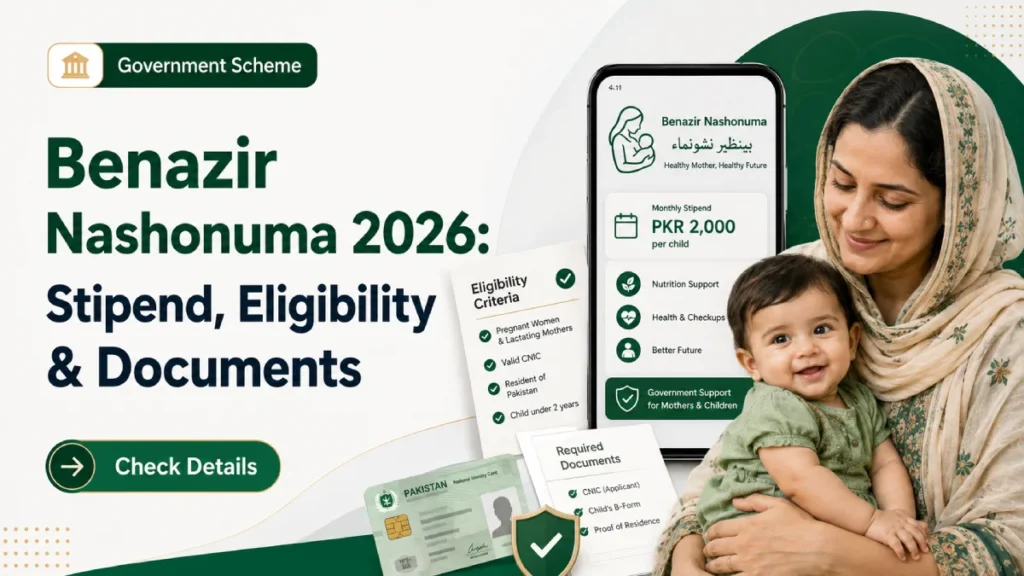
Benazir Nashonuma is BISP’s nutrition-focused support programme for pregnant and breastfeeding women and children under two years of age from eligible Benazir Kafaalat families. The programme combines conditional cash support with nutrition services, health monitoring, immunisation support and specialised nutritious food during the child’s first 1,000 days.
BISP says the programme has expanded nationwide and is operating in 158 districts through 558 facilitation centres, including mobile units. More than 4.6 million pregnant and breastfeeding women and children under two have been reached since the programme was launched.
Who is eligible for Benazir Nashonuma?
Hi there 👋
Want Latest Government Jobs in Pakistan? Connect on Whatsapp
Just click on Start Chat button below
The official BISP eligibility criteria focus on existing Kafaalat beneficiary families. A person does not become eligible for Nashonuma simply because she is pregnant or has a young child.
- A pregnant woman at any stage of pregnancy who is already enrolled under Benazir Kafaalat can be considered.
- A breastfeeding/lactating woman aged 18 to 59 years who is a Kafaalat beneficiary can be considered.
- A child of a Kafaalat beneficiary can remain in the programme until the age of two years.
- The beneficiary must live in an area where the programme is being implemented.
How much stipend is paid?
BISP currently publishes the following quarterly stipend structure for Nashonuma:
- Pregnant woman: Rs 3,500 per quarter.
- Boy child under two: Rs 3,500 per quarter.
- Girl child under two: Rs 4,000 per quarter.
The cash transfer is conditional. Beneficiaries must continue meeting the programme’s health and nutrition requirements. BISP states that the programme can provide conditional cash transfers of up to Rs 42,500 per beneficiary across the applicable support period, depending on beneficiary type and compliance.
Documents and evidence required
BISP lists several documents and verification requirements for enrollment:
- Valid CNIC of the beneficiary woman.
- Pregnancy screening from a registered health facility where the beneficiary is enrolling during pregnancy.
- Family Registration Certificate (FRC) issued by NADRA for child registration.
- Immunisation card issued through the Expanded Programme on Immunization (EPI) for an eligible child.
Beneficiaries should make sure names, CNIC details and family information match NADRA records. A serious mismatch can delay registration or verification.
What services are provided at Nashonuma centres?
Nashonuma is more than a cash-payment programme. BISP describes four major components:
- Conditional cash transfers linked with health-compliance milestones.
- Specialised nutritious food for pregnant and breastfeeding women and children under two.
- Health and nutrition awareness covering diet, household practices and the first 1,000 days.
- Maternal, newborn and child health services integrated with the health system.
These services are intended to reduce stunting and malnutrition rather than functioning as a general-purpose cash grant.
What health conditions must beneficiaries follow?
The stipend is linked to programme compliance. Important conditions include:
- Regular antenatal and postnatal health visits.
- Participation in awareness and counselling sessions.
- Use of specialised nutritious food as advised by health workers.
- Routine immunisation of children according to the national schedule.
- Regular growth monitoring for children under two.
Missing required follow-up visits can affect continued support because Nashonuma is designed as a conditional nutrition intervention.
How to enroll in Benazir Nashonuma
BISP does not describe Nashonuma as an open public online form that any household can submit. Enrollment is connected with Kafaalat status, health verification and the programme’s facilitation centres.
- Confirm that the woman/household is currently eligible under Benazir Kafaalat.
- Keep the beneficiary CNIC available.
- For pregnancy enrollment, obtain pregnancy confirmation through a registered health facility.
- For a child, keep the NADRA FRC and immunisation card available.
- Visit the relevant Nashonuma facilitation centre or BISP office for programme registration and guidance.
- Complete the required health and nutrition follow-up visits after enrollment.
How to check BISP household status first
If a woman is unsure whether the household is active under BISP, she can check through the official 8171 web portal. Nashonuma eligibility is linked to Kafaalat status, so checking the family’s BISP record is an important first step.
Do not confuse an 8171 status check with final Nashonuma enrollment. The nutrition programme still requires health and beneficiary verification.
When does support for a child end?
The programme focuses on the first 1,000 days of life. BISP states that a child graduates from Nashonuma after reaching two years of age.
Parents should therefore keep the child’s routine immunisation and growth-monitoring visits on schedule while the child is within the programme age limit.
What if the beneficiary cannot find a Nashonuma centre?
BISP says the programme is operational across 158 districts through hundreds of facilitation centres and mobile units. Availability at a specific health facility can differ by location.
A beneficiary who cannot identify the nearest centre should contact the local BISP Tehsil Office or use BISP’s official contact channels rather than paying a private person to arrange registration.
Important safety points
- BISP’s official SMS number is 8171.
- Do not pay an agent for Nashonuma registration.
- Do not hand over a CNIC, FRC or child’s immunisation card to an unauthorised person.
- Do not pay anyone who promises to increase the stipend or bypass health conditions.
- Report suspicious deductions or programme-related fraud through official BISP channels.
Official links
- Benazir Nashonuma – Official Programme Information
- 8171 BISP Eligibility Portal
- Benazir Income Support Programme
Common questions
Can a pregnant woman who is not a BISP beneficiary receive Nashonuma?
The official criteria require the pregnant or lactating woman to already be enrolled under Benazir Kafaalat.
How much does a girl child receive?
BISP lists Rs 4,000 per quarter for an eligible girl under two years of age.
Is a child’s immunisation required?
Yes. Routine immunisation and an immunisation card are part of the programme’s evidence and compliance requirements.
Is Nashonuma available only in a few pilot districts?
No. BISP states that the programme has expanded to 158 districts with 558 facilitation centres.
Check the latest eligibility, deadline, payment or application instructions on the relevant authority or organisation website. PakGovSchemes.org.pk is an independent information website and does not accept government or employer applications.
